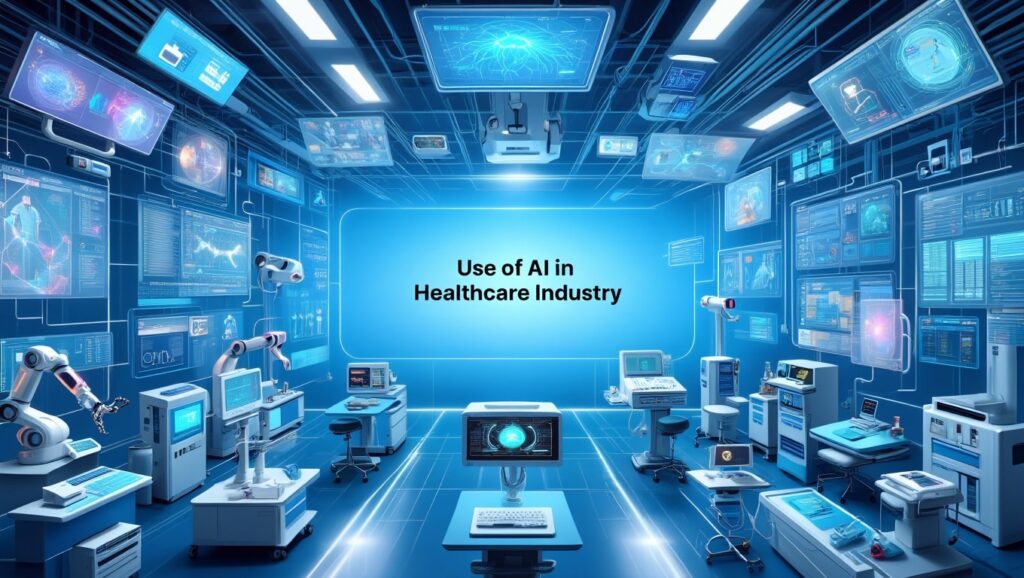
The healthcare industry stands on the precipice of a monumental transformation, largely driven by the rapid advancements and integration of artificial intelligence (AI). Once confined to the realm of science fiction, AI is now a tangible force, reshaping how medical professionals diagnose illnesses, develop treatments, manage patient care, and streamline administrative tasks.
Its potential to enhance efficiency, accuracy, and personalized medicine is immense, promising a future where healthcare is more accessible, effective, and tailored to individual needs.
This article delves into the multifaceted “use of AI in the healthcare industry,” exploring its current applications, inherent benefits, the challenges it presents, and the exciting future it portends.
From accelerating drug discovery to revolutionizing diagnostic imaging and personalizing patient engagement, AI is not just a tool; it’s a partner in the continuous pursuit of better health outcomes worldwide.
What Is AI in Healthcare?
Artificial Intelligence (AI) in healthcare refers to the use of complex algorithms and software to emulate human cognition and analysis in medical contexts. This broad definition encompasses various sub-fields, including machine learning, deep learning, natural language processing, and computer vision.
These technologies are designed to process vast amounts of data, identify patterns, and make predictions or recommendations with remarkable speed and accuracy.
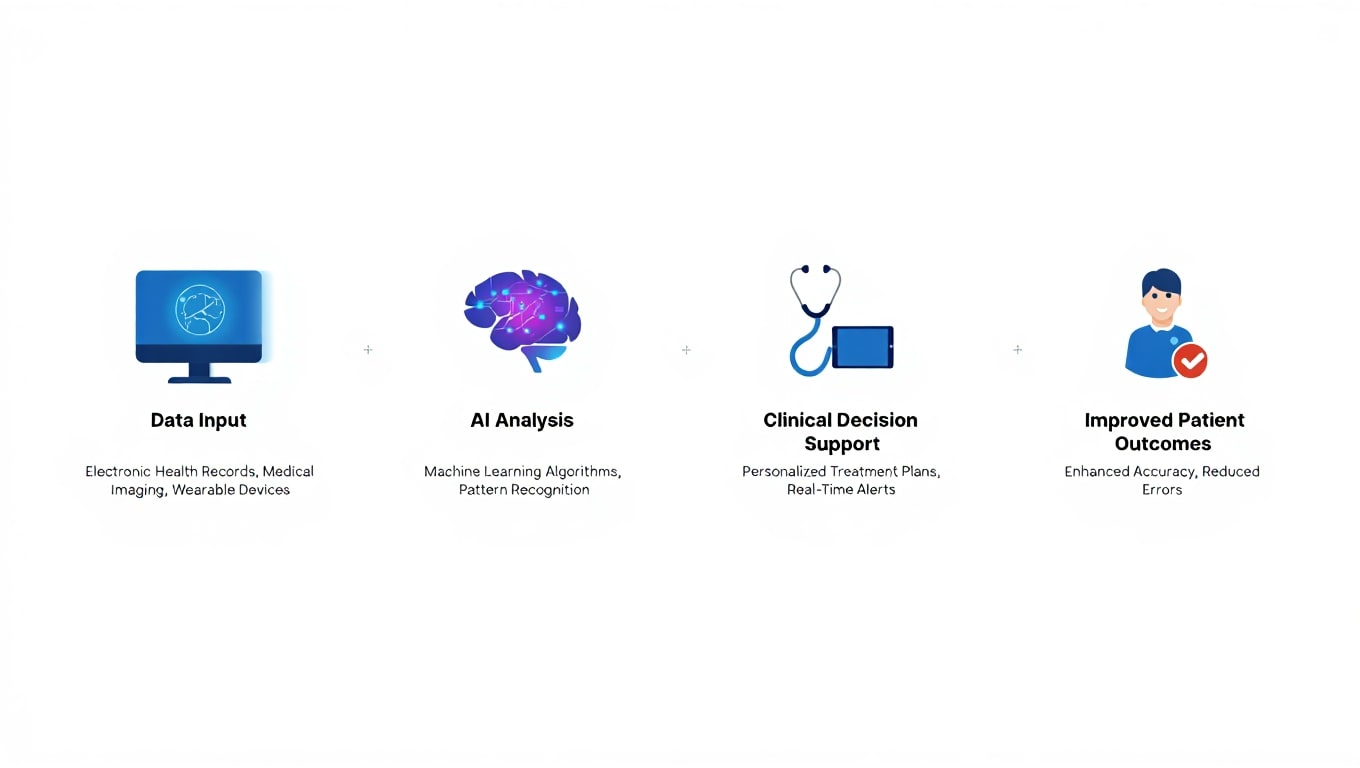
At its core, AI learns from data. In healthcare, this means feeding algorithms patient records, medical images, research papers, clinical trial results, and even genomic information. Through this learning process, AI systems can uncover insights that might be imperceptible to the human eye or too time-consuming to discover manually.
Machine learning, a prominent subset of AI, involves algorithms that improve their performance on a specific task with experience. Deep learning, a more advanced form, utilizes neural networks with multiple layers to learn complex patterns from raw data, especially prevalent in image recognition and speech processing.
These AI capabilities are pivotal for the sophisticated applications now emerging across the healthcare landscape.
How Is AI Being Used in Healthcare?
AI’s applications in healthcare are remarkably diverse, spanning nearly every aspect of the industry. From the initial stages of disease prevention to post-treatment follow-up, AI is introducing new levels of precision and personalization. It acts as an intelligent assistant, augmenting the capabilities of human experts.
One of its primary uses is in data analysis, where it can sift through massive datasets to identify trends, predict disease outbreaks, or flag high-risk patients. AI-powered tools also assist in administrative tasks, reducing the burden on healthcare staff and freeing up more time for direct patient interaction. Its versatility makes it invaluable in a sector grappling with increasing demands and complexity.
Benefits of AI in Healthcare
The integration of AI into healthcare brings forth a multitude of significant benefits, promising to revolutionize efficiency, accuracy, and patient outcomes. These advantages address some of the most pressing challenges faced by modern medical systems. By leveraging AI, healthcare providers can deliver more precise, timely, and personalized care.
One key benefit is enhanced diagnostic accuracy and speed. AI algorithms can analyze medical images and patient data with unparalleled precision, often identifying subtle markers of disease that human observers might miss. This leads to earlier detection and intervention, which is crucial for many conditions.
Another crucial advantage is the optimization of treatment plans. AI can analyze a patient’s unique genetic makeup, medical history, and lifestyle factors to recommend the most effective and personalized treatment protocols. This moves healthcare from a one-size-fits-all approach to highly individualized care, leading to better therapeutic responses and fewer side effects.
Furthermore, AI contributes significantly to operational efficiency and cost reduction. Automating routine administrative tasks, optimizing resource allocation, and predicting patient flow can drastically cut down on operational expenses.
This allows healthcare organizations to reallocate resources towards direct patient care and innovation.

| Benefit Category | Traditional Approach | AI-Powered Approach |
|---|---|---|
| Diagnostic Accuracy | Relies on human expertise, prone to fatigue/variability, and slower analysis. | High precision, consistent analysis of vast data, faster detection of subtle anomalies. |
| Personalized Treatment | Generalized protocols, limited data integration for individual customization. | Tailored plans based on genomics, history, and real-time data, optimizing outcomes. |
| Operational Efficiency | Manual administrative tasks, reactive resource allocation, and high overhead. | Automated processes, predictive resource management, and reduced administrative burden. |
| Drug Discovery | Long, expensive, trial-and-error process, limited compound screening capacity. | Accelerated compound identification, virtual screening, predictive toxicity analysis. |
Challenges and Concerns of AI in Healthcare
Despite its immense promise, the adoption of AI in healthcare is not without its significant challenges and concerns. These obstacles must be carefully addressed to ensure responsible and equitable integration of these powerful technologies. Overcoming these hurdles requires a collaborative effort from technologists, clinicians, policymakers, and ethicists.
One of the foremost concerns revolves around data privacy and security. Healthcare data is highly sensitive, and the aggregation and analysis of vast patient datasets by AI systems raise serious questions about confidentiality and the potential for breaches. Robust cybersecurity measures and strict regulatory frameworks are essential to protect patient information.
Another critical challenge is the issue of algorithmic bias. AI models learn from the data they are trained on, and if this data reflects existing societal biases or is unrepresentative of diverse populations, the AI can perpetuate or even amplify these biases. This could lead to inequities in diagnosis or treatment for certain demographic groups.
Regulatory hurdles also present a significant obstacle. The rapid pace of AI innovation often outstrips the ability of regulatory bodies to establish clear guidelines for safety, efficacy, and accountability. Determining who is responsible when an AI system makes an error—the developer, the physician, or the hospital—is a complex legal and ethical question.
Furthermore, the “black box” nature of some advanced AI models, where it’s difficult to understand how a decision was reached, poses challenges for transparency and trust.
Examples of AI in Healthcare
Real-world examples powerfully illustrate AI’s transformative impact across various healthcare domains. These applications range from major pharmaceutical research to day-to-day patient interactions. They showcase how AI is moving beyond theoretical discussions to practical implementation.
One prominent example is IBM Watson Health, which has been applied in oncology to assist clinicians in identifying personalized treatment options based on a patient’s unique genetic profile and the vast body of medical literature. While facing implementation challenges, it demonstrated the potential for AI to aid in complex decision-making.
Google DeepMind has also made strides in areas like eye disease diagnosis and early detection of acute kidney injury using advanced machine learning. Various startups are also developing AI solutions for everything from predicting sepsis to optimizing hospital bed management. These diverse applications highlight the breadth of AI’s potential.
Medical Imaging and Diagnosis
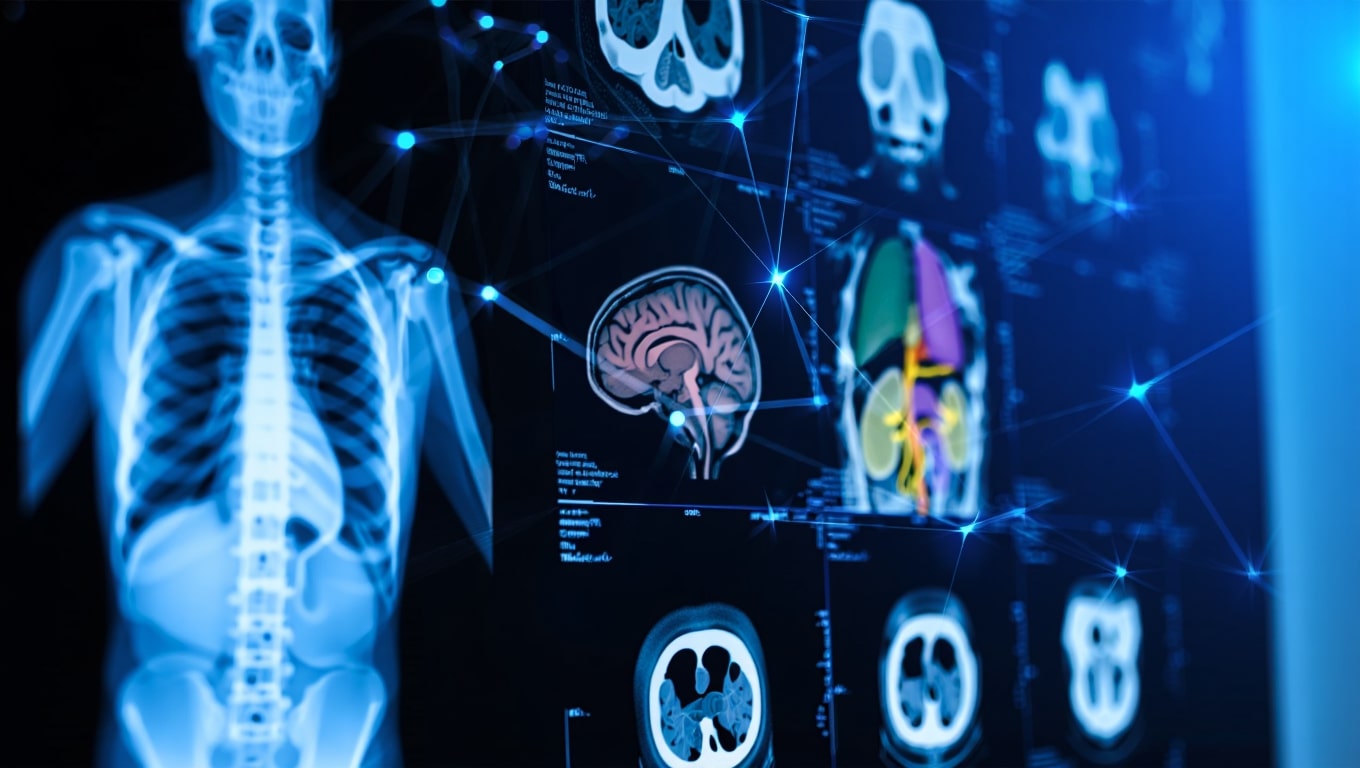
AI’s prowess in pattern recognition makes it particularly well-suited for medical imaging and diagnosis, a field experiencing profound changes. AI algorithms can analyze X-rays, MRIs, CT scans, and pathology slides with extraordinary speed and accuracy. This capability significantly augments the work of radiologists and pathologists.
For instance, AI can be trained to detect subtle anomalies indicative of cancer, neurological disorders, or cardiovascular diseases that might be missed by the human eye. Early detection often leads to more effective treatment and improved patient outcomes. Several AI systems are now FDA-approved to assist in tasks like identifying diabetic retinopathy, detecting lung nodules, and flagging potential strokes.
- Enhanced Accuracy: AI algorithms can identify minute details in images, improving diagnostic precision.
- Faster Turnaround Times: Automated analysis reduces the time required for image interpretation, leading to quicker diagnoses.
- Reduced Workload: AI assists human experts by prioritizing urgent cases and pre-screening images, easing the burden on clinicians.
- Consistency: AI provides consistent interpretations, reducing inter-observer variability.
AI in Patient Care
Beyond diagnostics, AI is increasingly integrated into direct patient care, aiming to enhance the patient experience and personalize treatment delivery. This includes everything from remote monitoring to virtual health assistants. The goal is to make healthcare more proactive, accessible, and tailored to individual needs.
AI-powered wearable devices can continuously monitor vital signs, activity levels, and sleep patterns, alerting patients and healthcare providers to potential health issues before they become critical. This proactive approach helps in managing chronic conditions and preventing hospital readmissions.
Virtual nursing assistants and chatbots are also being used to answer patient questions, provide medication reminders, and offer personalized health advice. These tools can improve patient engagement and adherence to treatment plans.
Furthermore, AI can analyze a patient’s response to therapy in real-time, allowing for adjustments to be made swiftly to optimize outcomes.
AI in Healthcare Management
The administrative and operational aspects of healthcare, often complex and resource-intensive, are also benefiting significantly from AI integration. AI can streamline workflows, optimize resource allocation, and improve overall efficiency in hospitals and clinics. This contributes to better patient flow and reduced operational costs.
For example, AI systems can predict patient no-shows, helping clinics manage appointment schedules more effectively and reduce wasted resources. They can also optimize bed allocation within hospitals, ensuring that resources are utilized efficiently during peak times. Predictive analytics, a core AI capability, is proving invaluable here.
Supply chain management in healthcare is another area where AI excels. By predicting demand for medicines and equipment, AI can prevent shortages and reduce waste, ensuring that critical supplies are available when and where they are needed. This administrative efficiency ultimately frees up healthcare staff to focus more on direct patient care.

The Future of AI in Healthcare
The future of AI in healthcare promises even more profound advancements, moving towards a highly personalized, predictive, preventive, and participatory (P4) model of medicine.
As AI technologies continue to mature and integrate more seamlessly, their impact will become even more pervasive and essential. The next decade is expected to see a deepening of AI’s role.
One exciting frontier is the development of fully autonomous AI systems capable of performing complex diagnostic and surgical tasks with minimal human intervention. While ethical and regulatory considerations are significant, the potential for increased access to specialized care, particularly in underserved areas, is enormous.
Further integration with other emerging technologies, such as IoT, blockchain, and advanced robotics, will unlock new possibilities. Imagine AI-powered robotic surgery guided by real-time data from wearable sensors, securely logged on a blockchain.
The synergy of these technologies will create a healthcare ecosystem far more intelligent and responsive than what exists today.
Current Market Trends in Healthcare AI
The healthcare AI market is experiencing robust growth, driven by increasing investment, technological advancements, and a growing recognition of AI’s value. Market reports consistently project significant expansion, with billions of dollars being poured into research and development by both tech giants and nimble startups. This indicates a strong belief in the long-term potential of AI.
Key trends include a shift towards more specialized AI solutions tailored for specific medical conditions or clinical workflows. There is also a growing emphasis on explainable AI (XAI) to build trust and facilitate adoption among clinicians. Partnerships between pharmaceutical companies, healthcare providers, and AI developers are becoming increasingly common, fostering innovation.
Investor interest remains high, particularly in areas like drug discovery, personalized medicine, and AI-powered diagnostics. Regulatory bodies are also evolving, slowly but surely, to create frameworks for the approval and deployment of AI medical devices. This expanding market signifies that AI is no longer a niche technology but a mainstream component of healthcare innovation.

AI in Drug Discovery and Research
The process of drug discovery and development has traditionally been notoriously lengthy, expensive, and fraught with high failure rates. AI is poised to dramatically accelerate and optimize this crucial area of medical science. By leveraging AI, researchers can significantly reduce the time and cost associated with bringing new therapies to market.
AI algorithms can rapidly screen millions of chemical compounds to identify potential drug candidates with desired properties. They can also predict the efficacy and toxicity of these compounds much earlier in the development pipeline, saving valuable resources by ruling out unpromising candidates. This computational approach replaces much of the laborious manual experimentation.
Furthermore, AI is instrumental in identifying new therapeutic targets by analyzing vast genomic and proteomic datasets. It can also optimize clinical trial design by selecting ideal patient cohorts and predicting trial outcomes.
Companies are now using AI to discover new molecules, repurpose existing drugs, and even design novel proteins, fundamentally changing the landscape of pharmaceutical research.
Impact of AI on Healthcare Professionals
The integration of AI into healthcare is not about replacing human professionals but rather augmenting their capabilities and transforming their roles. Healthcare professionals will increasingly collaborate with AI systems, using them as intelligent assistants to enhance their decision-making and efficiency. This shift requires new skills and a different approach to practice.
Clinicians will find AI handling many of the routine, repetitive, and data-intensive tasks, freeing them up to focus on complex cases, patient communication, and empathetic care. For example, AI can analyze vast amounts of patient data to present a summarized, actionable overview, enabling physicians to make more informed decisions faster.
However, this transition also necessitates continuous education and training for healthcare professionals to understand how to effectively use and interpret AI-generated insights. The human element, including critical thinking, empathy, and ethical judgment, remains irreplaceable. AI empowers professionals to deliver higher quality, more personalized care.

Implementing AI in Healthcare Systems
Successfully implementing AI in healthcare systems requires a strategic and thoughtful approach, moving beyond pilot projects to large-scale integration. It involves significant investments in infrastructure, data governance, and workforce training. A phased and collaborative strategy is often key to smooth adoption.
Firstly, a robust data infrastructure is paramount. AI models require access to high-quality, standardized, and diverse datasets. This often means investing in data integration platforms and ensuring data cleanliness and interoperability across different systems. Without good data, AI cannot perform effectively.
Secondly, gaining the buy-in of healthcare professionals and addressing their concerns is critical. This involves demonstrating the practical benefits of AI, providing comprehensive training, and involving them in the development and deployment process.
Ethical guidelines and clear accountability frameworks also need to be established to build trust and ensure responsible AI use.
Frequently Asked Questions About AI in Healthcare
As AI becomes more prevalent in healthcare, many questions arise regarding its function, impact, and future. Addressing these common queries helps clarify misconceptions and provides a clearer understanding of AI’s role.
Will AI replace doctors?
No, AI is intended to augment, not replace, healthcare professionals. It handles data-intensive tasks, freeing up doctors for complex decision-making and patient interaction.
Is AI in healthcare safe?
When developed and implemented responsibly with robust validation and regulatory oversight, AI tools can be safe and effective. Safety is a primary concern in their design and deployment.
How does AI ensure patient privacy?
AI systems process anonymized or de-identified data whenever possible. Strict data security protocols, encryption, and adherence to regulations like HIPAA and GDPR are crucial for protecting patient privacy.
What is the biggest challenge for AI in healthcare?
Key challenges include data privacy and security, addressing algorithmic bias, regulatory complexities, and ensuring interoperability between diverse healthcare systems.
Can AI personalize my treatment?
Yes, AI can analyze your unique genetic information, medical history, and lifestyle data to recommend highly personalized treatment plans and medication dosages.
Conclusion: The Role of AI in Transforming Healthcare
The integration of Artificial Intelligence into the Healthcare Industry marks a pivotal moment in medical history. From revolutionizing diagnostic processes and accelerating drug discovery to personalizing patient care and optimizing hospital management, AI’s applications are vast and continuously expanding.
Its ability to process and analyze immense datasets offers unprecedented opportunities to enhance accuracy, efficiency, and accessibility across the entire healthcare spectrum.
While significant challenges related to data privacy, ethical considerations, and regulatory frameworks must be navigated, the benefits of AI in creating a more predictive, preventive, personalized, and participatory healthcare system are undeniable.
AI is not merely a technological advancement; it is a fundamental shift that promises to empower healthcare professionals, improve patient outcomes, and ultimately transform the way we approach health and wellness for generations to come. The journey of AI in healthcare has only just begun, and its transformative potential is set to redefine the future of medicine.
Related Category: AI Trends