In today’s competitive digital landscape, having a strong online presence is no longer a luxury—it’s a necessity. Search Engine Optimization (SEO) is the cornerstone of this presence, guiding potential customers to your website through organic search results. However, many businesses and individual marketers operate on tight budgets, making investing in expensive premium SEO software a daunting prospect.
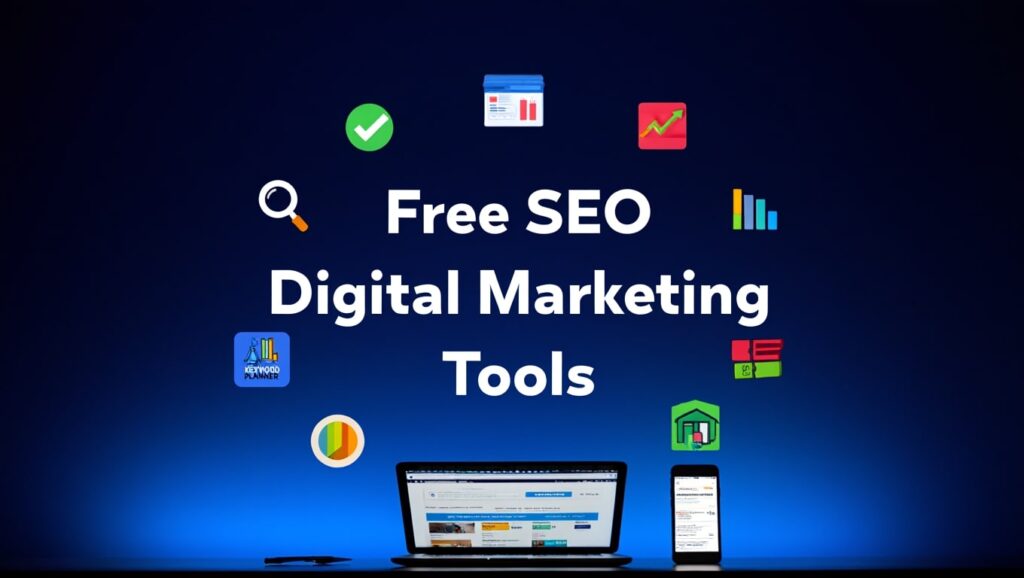
The good news is that a wealth of powerful and effective free SEO digital marketing tools are available. These tools can help you perform crucial SEO tasks, from keyword research and site audits to content optimization and backlink analysis, without spending a dime. This comprehensive guide will explore the best free SEO tools across various categories, helping you build a robust digital marketing strategy on a budget.
Whether you’re a small business owner, a budding blogger, or an experienced marketer looking to optimize your workflow, these free resources can significantly impact your search rankings and online visibility. Let’s dive into the world of accessible SEO and discover how to leverage these invaluable tools to achieve your digital marketing goals.
What Are SEO Tools?
SEO tools are software applications or web-based services designed to help website owners, marketers, and SEO professionals improve their website’s visibility and ranking in search engine results pages (SERPs). These tools provide data, insights, and functionalities that aid in various aspects of the SEO process. They automate tasks, analyze data, and offer recommendations to enhance a website’s performance.
The primary goal of using SEO tools is to understand how search engines view and rank a website, identify areas for improvement, and implement strategies to attract more organic traffic. They cover a wide spectrum of functions, including keyword research, technical site audits, on-page optimization, backlink analysis, competitor analysis, and performance monitoring. By leveraging these tools, users can make data-driven decisions to refine their SEO strategy.
While many premium SEO tools offer extensive features, a surprisingly robust selection of free options can perform many essential tasks. These free SEO digital marketing tools are often provided by search engines themselves or by third-party developers, offering basic yet powerful functionalities crucial for any SEO endeavor. They serve as an excellent starting point for those new to SEO or operating with limited resources.
Key point: SEO tools are crucial for gaining insights into website performance and identifying opportunities for ranking improvement in search engines.
Best Free SEO Tools for Keyword Research
Keyword research is the foundation of any successful SEO strategy. It involves identifying the terms and phrases people use when searching for information, products, or services related to your business. Free keyword research tools allow you to discover these valuable keywords, understand their search volume, and assess their competitiveness without incurring any cost.
One of the most essential free tools is Google Keyword Planner. While primarily designed for advertisers, it offers excellent insights into keyword ideas, search volume trends, and competition levels. You’ll need a Google Ads account to access it, but you don’t have to run ads. This tool is invaluable for uncovering new keyword opportunities and understanding user intent.
Ubersuggest by Neil Patel provides a generous free tier that allows users to perform daily keyword searches, view search volume, keyword difficulty, and related keyword suggestions. It also offers content ideas and competitor analysis, making it a comprehensive option for basic research. Another fantastic tool is AnswerThePublic, which visualizes questions, prepositions, comparisons, and alphabetical searches related to your seed keyword, helping you understand user queries and generate content ideas.
For understanding trending topics and seasonal interest, Google Trends is indispensable. It shows the popularity of search queries over time and across different regions, allowing you to capitalize on timely content opportunities. Lastly, for quick and direct keyword suggestions, simply using the Google search bar’s auto-suggest feature and “People Also Ask” section can reveal highly relevant long-tail keywords.

Top Free SEO Analytics Tools
Understanding how users interact with your website and how search engines perceive it is critical for continuous SEO improvement. Free SEO analytics tools provide the data you need to monitor performance, identify issues, and measure the impact of your SEO efforts. These tools are indispensable for tracking organic traffic and user behavior.
The undisputed leader in this category is Google Analytics. This powerful tool tracks website traffic, user demographics, behavior flows, conversion rates, and much more. It offers a deep dive into who your audience is, how they found your site, and what they do once they’re there. While its interface can seem complex initially, mastering Google Analytics is crucial for any serious digital marketer.
Complementing Google Analytics is Google Search Console (GSC), an absolute must-have for every website owner. GSC provides direct insights from Google about your site’s performance in search results. It shows you which queries bring users to your site, your average position, click-through rates, and any indexing issues Google might be encountering. It also helps you submit sitemaps and disavow spammy backlinks.
Not to be overlooked, Bing Webmaster Tools offers similar functionalities to Google Search Console but for the Bing search engine. While Bing’s market share is smaller, optimizing for it can still bring valuable traffic. It provides SEO reports, keyword research tools, and site scanning for common issues, ensuring your site is discoverable across different search engines.
Free Technical SEO Tools for Site Audits
Technical SEO focuses on optimizing your website and server to help search engine spiders crawl and index your site more effectively. Even the most compelling content won’t rank if search engines can’t access or understand your pages. Free technical SEO tools can help you identify and fix critical issues that hinder your site’s performance.
As mentioned, Google Search Console is vital for technical SEO. It reports on index coverage (pages indexed vs. not indexed), mobile usability issues, core web vitals performance (loading speed, interactivity, visual stability), and security problems. Regularly checking GSC ensures your site meets Google’s technical requirements.
For a more in-depth crawl of your site, Screaming Frog SEO Spider offers a free version that allows you to crawl up to 500 URLs. This tool can identify broken links, redirect chains, missing meta descriptions, duplicate content, and more. It’s an excellent diagnostic tool for identifying a wide range of on-site technical issues quickly.
Website speed is a critical ranking factor and user experience component. Google PageSpeed Insights analyzes your page’s content and provides suggestions to make that page faster. It offers scores for both mobile and desktop, along with actionable recommendations. Similarly, GTmetrix provides a detailed breakdown of your site’s performance, including loading times, total page size, and requests, helping you pinpoint bottlenecks.

Best On-Page SEO Optimization Tools
On-page SEO refers to optimizing individual web pages to rank higher and earn more relevant traffic in search engines. This includes optimizing your content, title tags, meta descriptions, headings, images, and internal links. Fortunately, many free SEO digital marketing tools exist to guide you through this process.
For WordPress users, plugins like Yoast SEO and Rank Math offer robust free versions that are indispensable for on-page optimization. They provide real-time analysis of your content, suggesting improvements for readability, keyword usage, meta descriptions, title tags, and schema markup. These plugins practically hold your hand through the on-page optimization process, helping you create SEO-friendly content.
Google Lighthouse, built into Chrome’s developer tools, is another powerful free resource. It performs audits for performance, accessibility, best practices, and SEO. The SEO audit checks for things like responsive design, structured data validity, and proper meta tag usage. It offers actionable advice to improve your page’s overall health and search engine compatibility.
To ensure your structured data (schema markup) is correctly implemented, use Google’s Rich Results Test. This tool validates your schema and shows you which rich results your page is eligible for. Correct schema implementation can significantly enhance your visibility in SERPs, leading to higher click-through rates.
Free Link Building and Backlink Analysis Tools
Backlinks—links from other websites to yours—are a critical ranking factor, signaling to search engines that your content is valuable and trustworthy. While active link building often involves outreach, free tools can help you analyze your existing backlink profile and identify potential link opportunities or harmful links.
Google Search Console offers a crucial “Links” report that shows you which sites are linking to yours and the most linked pages on your site. This is your primary source of backlink data directly from Google. It also allows you to identify spammy links that might require a disavow.
Several premium SEO suites offer limited free versions of their backlink checkers. Ahrefs Free Backlink Checker allows you to check the top 100 backlinks to any website or URL, along with its Domain Rating (DR) and URL Rating (UR). Similarly, Moz Link Explorer provides a free account that lets you run 10 queries per month, showing basic link metrics and top backlinks.
These limited free tools are excellent for getting a snapshot of a domain’s backlink profile or analyzing a few key competitors. They can help you identify high-quality backlinks to replicate or spot low-quality links that might be negatively impacting your SEO. Combining these with GSC provides a decent picture of your link landscape.
Local SEO Tools to Boost Your Visibility
For businesses with physical locations or those targeting a local customer base, Local SEO is paramount. It ensures your business appears prominently in local search results and on maps. Several free SEO digital marketing tools are designed specifically to enhance your local visibility and attract nearby customers.
The cornerstone of local SEO is Google Business Profile (formerly Google My Business). Claiming and optimizing your GBP listing is absolutely free and essential. It allows your business to appear in Google Maps, the local pack (the 3-pack of businesses shown prominently in search results), and Google Search. You can manage your business information, hours, photos, customer reviews, and posts directly through this platform.
Managing your online reviews is also critical for local SEO. While not a “tool” in the traditional sense, monitoring and responding to reviews on platforms like Yelp for Business Owners (free account) and within your Google Business Profile can significantly impact your local reputation and ranking. Positive reviews boost trust and visibility.
Additionally, ensure your Name, Address, and Phone number (NAP) are consistent across all online directories and your website. Tools like BrightLocal’s Free Local Search Audit can sometimes offer limited free checks for NAP consistency and local citations, though full features are paid. Utilizing Google Search Console to monitor local search queries that drive traffic to your site also provides valuable insights.
Mobile SEO Tools for Better User Experience
With the majority of internet users accessing websites via mobile devices, mobile-friendliness is no longer optional—it’s a critical ranking factor. Ensuring your website provides an excellent user experience on smartphones and tablets is crucial for SEO success. Fortunately, several free tools can help you assess and improve your mobile SEO.
Google’s own Mobile-Friendly Test is a quick and easy way to check if your page is optimized for mobile devices. Simply input your URL, and the tool will analyze your page and report on its mobile-friendliness, highlighting any issues that might deter mobile users or search engine crawlers.
Another indispensable tool is Google PageSpeed Insights, which we discussed earlier. It provides detailed performance reports for both mobile and desktop versions of your site. This includes metrics like First Contentful Paint, Largest Contentful Paint, and Cumulative Layout Shift, all of which are part of Google’s Core Web Vitals and significantly impact mobile user experience and rankings.
Finally, Google Search Console offers a dedicated “Mobile Usability” report. This report identifies specific pages on your site that have mobile-friendliness issues, such as text that’s too small, clickable elements that are too close together, or content wider than the screen. Regularly monitoring this report allows you to address problems quickly and maintain a strong mobile presence.
Free Content Optimization Tools
Content is king, but optimized content is royalty. Crafting high-quality, engaging, and SEO-friendly content is essential for attracting and retaining your audience. Free content optimization tools can help you refine your writing, improve readability, and ensure your content aligns with search engine best practices.
Grammarly (free version) is a widely popular tool for checking grammar, spelling, and punctuation errors. While the premium version offers advanced style suggestions, the free version is more than adequate for ensuring your content is error-free and professional. Clean, correct writing enhances credibility and readability.
For improving readability and writing style, Hemingway Editor is an excellent resource. It highlights overly complex sentences, passive voice, adverbs, and difficult-to-read phrases, encouraging you to write clearer and more concise content. Readability is a crucial factor for user engagement and can indirectly influence SEO.
While not directly an SEO tool, utilizing Google Docs (with its built-in spell checker and grammar suggestions) can be very helpful for content creation and collaboration. To ensure content originality, a limited free check from a tool like Copyscape can help you detect potential plagiarism issues before publishing, protecting your site’s reputation and SEO.
AI-Powered SEO Tools for Better Rankings
Artificial intelligence (AI) is rapidly transforming the SEO landscape, offering new ways to analyze data, generate content ideas, and identify ranking opportunities. While many advanced AI SEO tools come with a price tag, several free AI-powered resources and integrations can still provide significant value.
Large Language Models (LLMs) like ChatGPT (free version) and Google Gemini (free version) can be powerful allies for SEO. They can help brainstorm keyword ideas, generate outlines for articles, summarize complex topics, rephrase sentences for better readability, and even draft meta descriptions or title tags. While they shouldn’t replace human creativity, they can significantly speed up the content creation process.
Many free browser extensions now leverage AI to assist with SEO tasks. For instance, some extensions can provide quick keyword insights directly on SERPs, analyze page content for optimization opportunities, or help with content summarization. These typically offer basic functionalities, but can be useful for quick checks.
Some content optimization platforms are beginning to integrate free AI components. For example, some free tools might offer an AI-generated content brief based on a target keyword, or suggest related topics and questions to cover, drawing on vast datasets to identify content gaps and opportunities. Always remember to fact-check and refine any AI-generated content to ensure accuracy and maintain your brand voice.
Pros and Cons of Free SEO Tools
While free SEO digital marketing tools offer incredible value, it’s important to understand their limitations compared to their premium counterparts. Weighing these pros and cons will help you set realistic expectations and make the most of your free toolkit.
Pros of Free SEO Tools:
- Cost-Effective: The most obvious benefit is that they are free, making them accessible to individuals and businesses with limited budgets.
- Accessibility: Many are web-based and easy to use, requiring no complex installation or technical expertise to get started.
- Learning Opportunity: They provide an excellent entry point for beginners to learn the fundamentals of SEO without financial commitment.
- Sufficient for Basic Needs: For small websites, new blogs, or specific, isolated tasks, free tools often provide enough data and functionality.
- Complementary to Paid Tools: Even those with paid subscriptions often use free tools like GSC and Google Analytics for core insights.
Cons of Free SEO Tools:
- Limited Features: Free versions typically offer a subset of features compared to premium versions, with data caps, fewer reports, or restricted historical data.
- Less Data Depth: You might get general trends but lack granular insights, detailed competitor analysis, or comprehensive keyword metrics.
- Fragmented Workflow: Often, you need to use multiple free tools for different tasks, leading to a less streamlined and more time-consuming workflow.
- Lack of Dedicated Support: Free tools usually come with community support or basic documentation, not personalized technical assistance.
- Slower Updates/Innovation: Free versions might not receive new features or data updates as frequently as paid tools.
Here’s a quick comparison:
| Feature | Free SEO Tools | Paid SEO Tools |
|---|---|---|
| Cost | $0 | Subscription-based |
| Data Volume | Limited queries/data | Extensive, comprehensive |
| Reporting | Basic, often manual, combining | Automated, detailed, customizable |
| Support | Community/Self-help | Dedicated customer service |
| Integration | Limited, often standalone | Often, an integrated suite |
How to Choose the Right Free SEO Tools
With so many free SEO tools available, it can be overwhelming to decide which ones are best for your needs. The key is to start by understanding your specific SEO goals and the current challenges your website faces. This focused approach will help you select the most relevant and impactful tools for your digital marketing strategy.
First, identify your immediate priorities. Are you struggling with low organic traffic? Then focus on keyword research and analytics tools. Is your website slow or experiencing indexing issues? Technical SEO tools should be your priority. Do you need to improve content quality? Look for content optimization and on-page SEO tools.
Consider the interface and ease of use. While some tools like Google Search Console are essential regardless of complexity, others might have a steep learning curve. Start with tools that are intuitive and provide clear, actionable insights. Many free SEO tools offer quick tutorials or community forums that can help you get started.
Finally, think about how different tools can complement each other. For example, using Google Analytics to understand traffic patterns, then Google Search Console to identify specific ranking keywords, and finally Google Keyword Planner for expanding your keyword list creates a synergistic workflow. Don’t be afraid to experiment with several options before settling on your core free SEO toolkit.

FAQ About Free SEO Tools
Here are some frequently asked questions about leveraging free SEO digital marketing tools:
Q: Can I achieve good SEO results using only free tools?
A: Absolutely! Many small businesses, bloggers, and startups achieve significant SEO gains using a combination of the free tools mentioned in this guide. While paid tools offer more comprehensive features, free tools provide essential data and functionalities for effective optimization, especially when combined with a solid understanding of SEO principles.
Q: Are free SEO tools less accurate than paid ones?
A: Not necessarily less accurate, but they often provide less data or less frequent updates. Tools directly from Google (like Google Analytics, Search Console, and Keyword Planner) are highly accurate as they come from the source. Third-party free tools may have data limitations, but generally strive for accuracy within their scope.
Q: How often should I check my SEO tools?
A: It depends on the tool and your activity. Google Search Console and Analytics should ideally be checked weekly for performance and critical issues. Keyword research might be done less frequently (monthly or quarterly), while on-page tools are used as you create new content. Technical audits can be done monthly or quarterly, or after significant site changes.
Q: Do free SEO tools pose any security risks?
A: Most reputable free tools, especially those from well-known companies or Google itself, are safe. Always be cautious when downloading software from unknown sources. For web-based tools, ensure you understand what data you are sharing. Google’s tools require you to verify ownership of your site, which is a standard security measure.
Q: Can free tools replace an SEO expert?
A: No. Free tools provide data and suggestions, but an SEO expert offers strategic guidance, interprets complex data, adapts to algorithm changes, and integrates SEO into a broader marketing plan. Tools are instruments; an expert is the craftsman. However, free tools empower individuals to perform many tasks an expert would.
Maximizing SEO Results with Free Tools
Simply having access to free SEO digital marketing tools isn’t enough; you need a strategy to maximize their potential. By integrating them effectively and consistently applying SEO best practices, you can achieve significant improvements in your search rankings and organic traffic.
Firstly, combine tools for a holistic view. Don’t rely on just one tool. Use Google Search Console for performance and index issues, Google Analytics for user behavior, and Google Keyword Planner for keyword insights. This triangulation of data gives you a much clearer picture of your website’s health and opportunities.
Secondly, be consistent with your efforts. SEO is not a one-time task; it’s an ongoing process. Regularly monitor your performance, conduct audits, optimize content, and address any new issues identified by your tools. Set a schedule for checking key metrics and making adjustments.
Thirdly, focus on actionable insights. Don’t just collect data; interpret it. If PageSpeed Insights recommends image optimization, act on it. If Search Console shows a drop in mobile usability, investigate and fix the problem. The value of these free tools lies in their ability to guide your actions.
Finally, never stop learning. The SEO landscape is constantly evolving. Stay updated with Google’s guidelines, algorithm changes, and new features in the tools you use. The better you understand SEO principles, the more effectively you can leverage these free resources to your advantage.
Final Verdict: Building Your Free SEO Toolkit
The journey to better search engine rankings doesn’t have to be expensive. As this guide has shown, there’s an impressive array of Free SEO digital marketing tools available that can empower you to tackle nearly every aspect of search engine optimization. From understanding what your audience searches for to ensuring your website is technically sound and user-friendly, these tools provide the insights and functionalities necessary for success.
By strategically combining resources like Google Search Console, Google Analytics, Google Keyword Planner, Ubersuggest, and specialized tools for on-page, technical, and local SEO, you can build a formidable free SEO toolkit. This toolkit, coupled with consistent effort and a commitment to learning, can significantly enhance your online visibility and drive organic growth.
Remember, while premium tools offer convenience and depth, the core principles of SEO remain the same. Free tools provide the essential foundation to implement these principles effectively. Start experimenting, analyzing, and optimizing today. Your website’s potential is waiting to be unlocked, and these free resources are your key to doing it. Embrace the power of free, and watch your digital presence flourish.
Related Category: Business Trends